
At the end of September 2025, two years after my last visit, I left Montréal and boarded a flight to my field site: the mining settlement of Schefferville and the adjacent Innu community of Matimekush-Lac John. The journey included brief stopovers in Québec City and Sept-Îles to collect additional passengers bound for northern Québec and its communities, many of which can only be reached by plane. During the trip and particularly on the leg from Sept-Îles to Schefferville, I could see before my eyes the immensity of the boreal forest rolling below, mile by mile, stretching across the traditional, unceded territory that the Innu call Nitassinan. The sight from above brought me back to the previous times I travelled on the ground, by train – with the indigenous-owned railway line Tshiuetin that connects Sept-Îles to Schefferville through a 16-hour journey. This time, it took me only a few hours of flight from Montréal and a couple stops on the way to reach my destination.
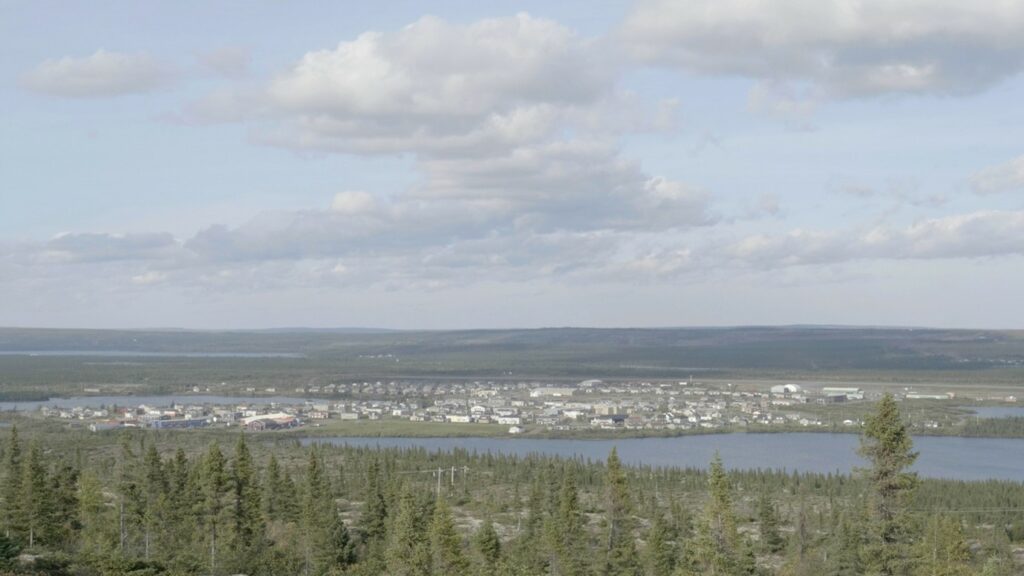
On a sunny late September afternoon, I finally landed at the tiny Schefferville airport. Like every other time I arrived in the region I could feel the sensation of entering “another Québec”: located at the northern border between the two Canadian provinces of Québec and Labrador & Newfoundland and nestled deep in the boreal forest, Schefferville and Matimekush-Lac John share a short but intense history shaped by the volatile cycles of mining operations and centuries of settler-indigenous relationships. Created in 1954 by the Iron Ore Company of Canada (IOC), Schefferville has gone through a changing history of boom-and-bust mining operations that has heavily marked both the town and the surrounding landscape. Opened only a few years later by the federal and provincial government, the Innu reservation of Matimekush-Lac John has equally been marked by these same events, which have left the community to deal with the past and ongoing consequences of decades of deregulated extraction.
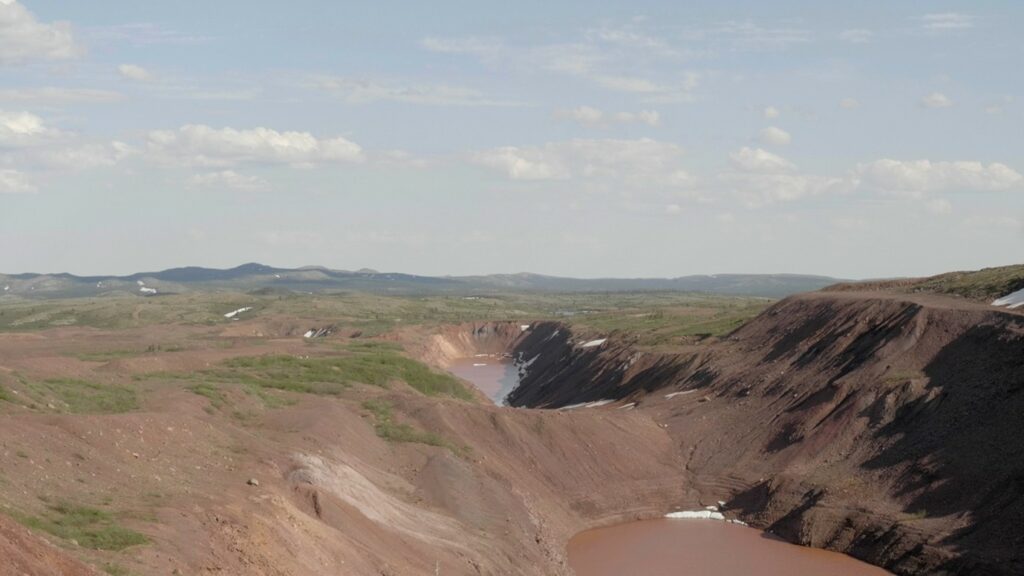
The reasons for my recurring presence in the region are connected to my doctoral research project in visual and environmental anthropology. The focus of my project is precisely to explore the multilayered impacts of extraction in the Canadian Subarctic, and more particularly in the region of these two adjacent but distinct communities – a region that is both a landscape of extraction and a part of the Innu traditional, unceded territory, the Nitassinan. As during my previous visits, I planned to stay at the “semi-functioning” McGill Subarctic Research Station (MSARS). The station had to implement some severe funding cuts since the COVID epidemic in 2020 and is now functioning with extremely basics resources. However, as a visual and environmental anthropologist, a bed and some food is pretty much all I need, as most of my research is based on fieldwork and participant observation – the two cornerstones of the ethnographic method. In most cases, this means meeting local people, participating in their daily activities – giving a hand whenever needed – and doing some occasional formal and informal interviews. As a visual anthropologist, most of this process is accompanied by the occasional filming and sound recording.
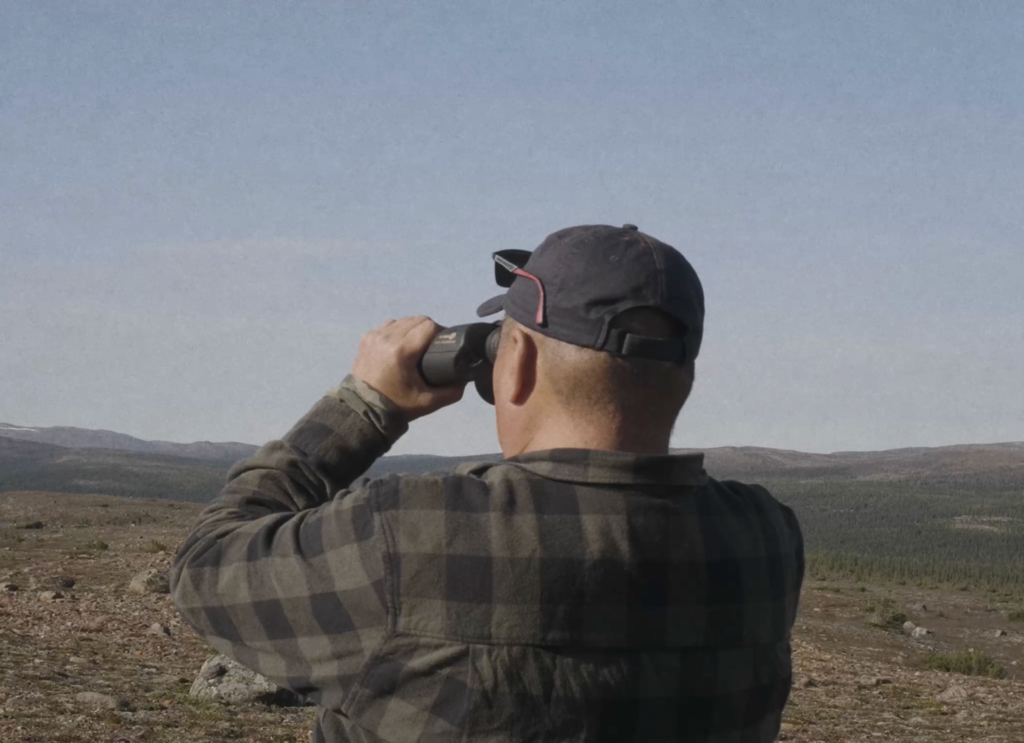
My last visit in 2023 – made possible by the SPI Polar Access Fund – followed up on my own doctoral project, but also on a medium-term project consisting in implementing an Environmental Bureau in the community of Matimekush-Lac John to document and monitor environmental affairs in the mining region. The latter project has been carried out by a working group combining community members, natural scientists, public officials and representatives of environmental agencies: My role has been that of an observer and helper in the very first steps of the project. More precisely, I served the goals of the project by producing documentation and audiovisual materials on the territory of the region, as well as engaging with local Innu people on ancestral and contemporary land use and environmental knowledge. In fact, due to the mining activities, there had been intense activity on land monitoring from the working group members, which I could document using my camera and audio equipment. The collected material is part of my ongoing PhD thesis that will take the form of both an ethnographic monograph and a film.
In 2023, the conditions were not ready for the actual implementation of an Environmental Bureau, as too many factors were yet to be cleared by the Matimekush-Lac John Band Council – the political form of government of Indigenous reservations in Canada. Two years later, during the summer of 2025, the Environmental Bureau finally became a reality. During my visit in 2025, one of the main goals was to visit the location of the newly opened Environmental Bureau, to meet and discuss with the Bureau’s employees – some of them have been the main interlocutors for my doctoral project since its beginning – and to start to think about how to pass on years of research to the Bureau’s members.
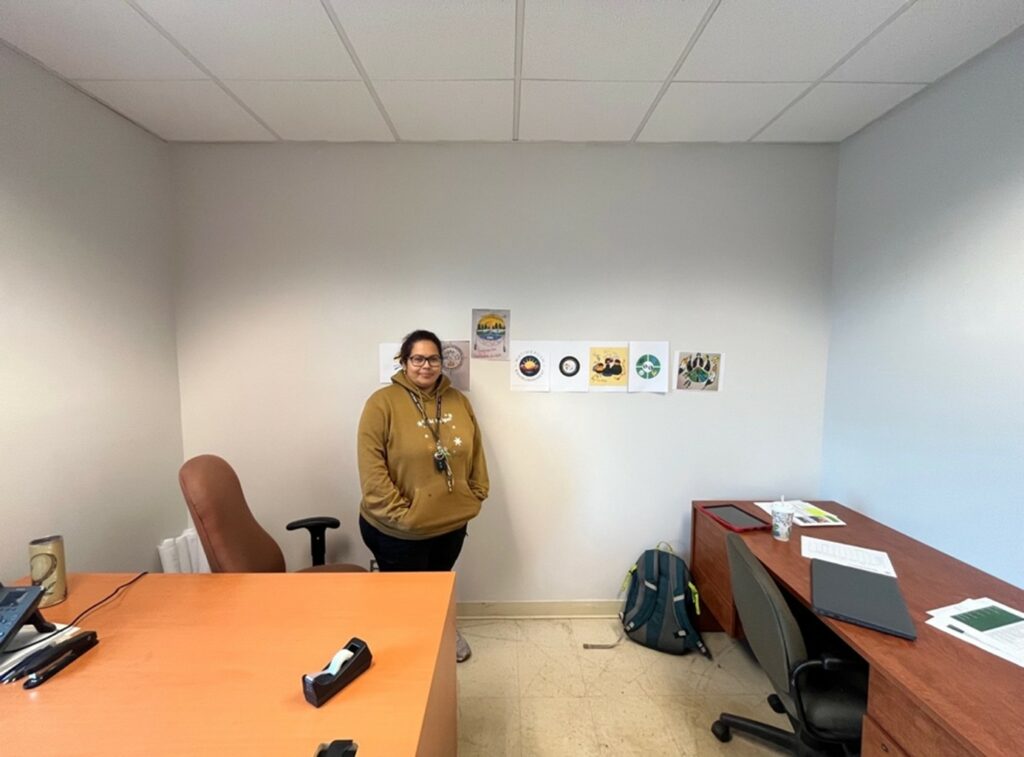
During my time in the community, I thus had the opportunity to visit friends and collaborators, devoting time to strict professional exchanges but also some time to just “hang out” and discuss about life in Schefferville and Matimekush-Lac John after two years of absence. I was happy to see the Bureau’s progress and started to discuss about potential ways to share some of the material I collected during my PhD with it, and – more widely – with the community. I am now in the process of finalising my PhD dissertation and film, and I look forward to a form of restitution of my doctoral project that has been an integral part of my life during the last years.
I would like to thank all my precious fieldwork interlocutors, without whom none of this would have been possible. I also wish to thank the Swiss Polar Institute and the Swiss National Science Foundation for funding my project and making the prolonged and recurrent fieldwork possible, which proved to be essential for such an engagement. Finally, I would also like to thank my colleagues from the social anthropology departments at the University of Bern and McGill University for supporting and enriching my work.


16mm screenshots of boreal forest vegetation in Schefferville and Matimekush-Lac John. © 2025 Andrea Bordoli, all rights reserved
Andrea Bordoli is a PhD Student at the Institute of Social Anthropology at the University of Bern, Switzerland. His fieldwork took place in September 2025 with financial support from a Polar Access Fund.
- Read more about Andrea Bordoli’s project
- For more information on his work, two open-access articles have been published so far:
- Remediating Visual Extractivism and the Geological Archive: Multimodal Perspectives from Subarctic Québec, available at: https://trajectoria.minpaku.ac.jp/articles/2025/vol06/02_3.html
- Breaking Points: Mediated Contaminations, Infrastructural Toxicity, available at: https://roadsides.net/collection-no-013/c-13-bordoli/