Fieldnotes

Impressions, anecdotes and experiences from the field. Authors are beneficiaries of SPI funding. The posts present the authors’ reflections of their field experiences.

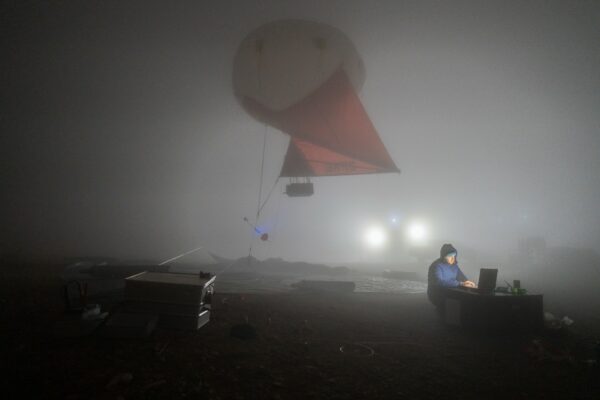
Developing and testing a flight computer for balloon-borne measurements – Lionel Favre, Michael Lonardi, Marc Nicollerat

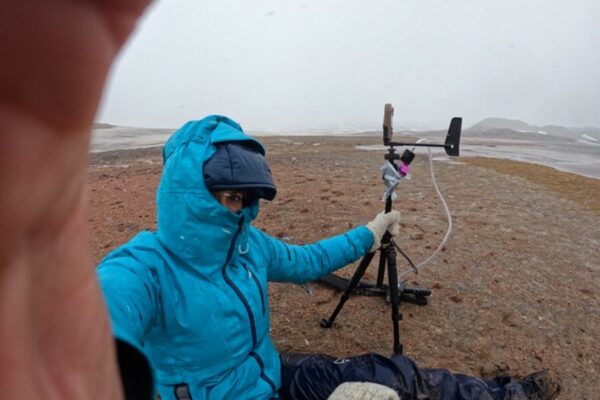
Chapter 0: Why a flight computer? At the daring frontier of science, deep within the Extreme Environments Research Laboratory (a.k.a. EERL), we chase clouds and wrestle with aerosols in the wildest corners of the planet – the polar regions! Our secret weapon? A helium-filled tethered balloon that gracefully ascends into […]

Read More

Exploring human-environment relationships in Schefferville and Matimekush-Lac John – Andrea Bordoli

At the end of September 2025, two years after my last visit, I left Montréal and boarded a flight to my field site: the mining settlement of Schefferville and the adjacent Innu community of Matimekush-Lac John. The journey included brief stopovers in Québec City and Sept-Îles to collect additional passengers […]

Read More

Living the research: collaboration for sustainability among extreme Antarctic teams – Monika Maślikowska

As predicted, the journey plan to Antarctica was evolving as dynamically as the extreme team dynamics data we expected to uncover in such an extreme context. The volatile Antarctic environment seemed to have transcended into the polar mindset. However, after months of preparations and several days of anticipation in Punta […]

Read More

Hydrorecord: Artistic and scientific impressions of aquatic systems in Southern Greenland – Pauline Agustoni and David Janssen

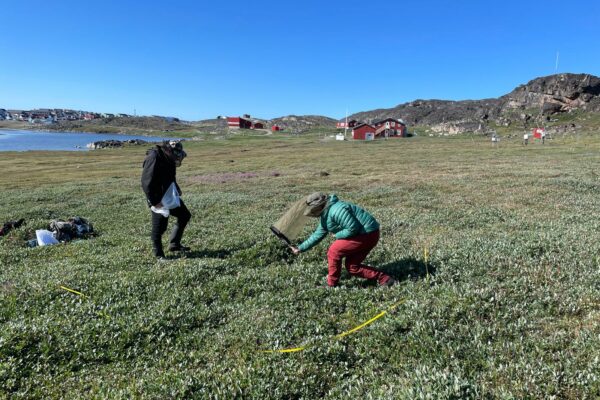
As part of our art and science collaboration in the context of the PolARTS programme from Swiss Polar Institute and Pro Helvetia, we (Pauline Agustoni and David Janssen) had the chance to travel to Southern Greenland for a three-week field trip from 24 June until 15 July 2025. For a […]

Read More

Uncovering microbial fluxes in a remote Arctic lake in East Greenland – Anna Carratalà

Lakes are complex ecosystems that host diverse microbial communities, with aerosols, water, and sediments each serving as distinct habitats supporting unique bacterial populations. These habitats offer valuable perspectives on microbial dynamics across spatial and temporal scales. Bacteria are the most abundant life forms in cold lakes, where they play vital roles such as degrading organic matter and contributing to primary production, making them fundamental to the structure and functioning of the trophic chain. Arctic lakes are highly dynamic systems subjected to extreme environmental conditions – including prolonged ice cover for much of the year, intense winds, and heavy snowfall.

Read More
Working in moving dirt: studying the impacts of climate change on frozen debris lobe stability in the Brooks Range, Alaska – Markus Stoffel

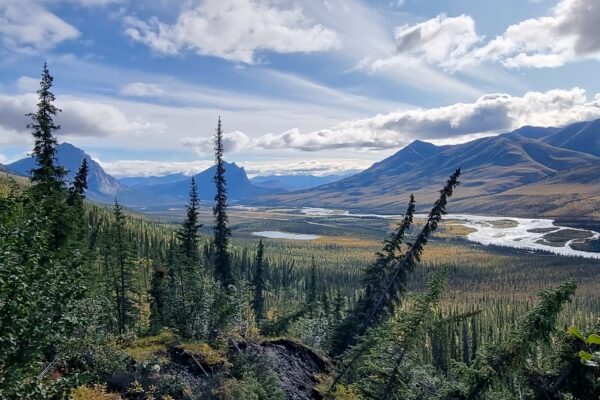
A dream come true – after months of preparation and intense exchanges with Benjamin V. Gaglioti and Margaret M. Darrow from the University of Alaska Fairbanks, my trip to the last frontier finally started in May 2023. A few days in Fairbanks first, a big shopping trip to one of […]

Read More

With heavy baggage to the top of Europe – Gunter Stober and Witali Krochin

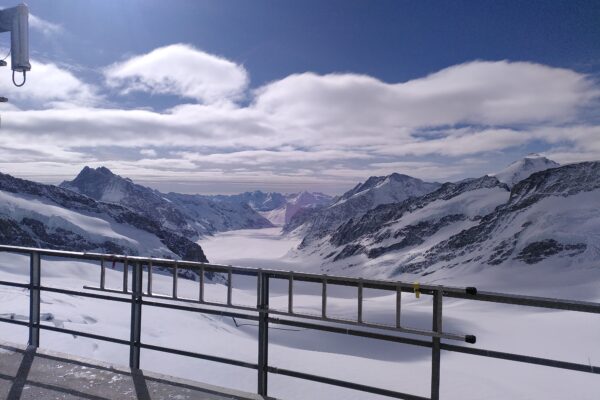
Introduction TEMPERA-C is a microwave radiometer designed to measure microwave radiation from oxygen emissions at a frequency of 53 GHz. The resulting microwave spectra are used to retrieve atmospheric temperature profiles up to the mesosphere, reaching altitudes of approximately 60 km. During a test campaign, TEMPERA-C was deployed to take […]

Read More