
Participation in UNIS AGF-312 Remote Sensing of the Cryosphere 2025
Université de Fribourg
Lay summary
Description of the programme
The course gave a solid introduction to remote sensing methods and their use in studying the cryosphere. The lectures focused on understanding how different properties of sea ice, land ice, and snow can be measured from space. We learned about electromagnetic energy, satellite missions related to the cryosphere, and how to interpret satellite data. The course was well structured and provided a theoretical foundation, complemented by some practical exercises and examples in data analysis.
How did you benefit from the programme?
I study glaciology and geomorphology and had already worked with satellite data in my Bachelor Thesis for glacier research. This course helped me deepen my understanding of remote sensing especially for land ice, and snow. During my project here in Svalbard, I used satellite imagery to study glacier surges, which was very interesting and valuable for my studies. This training gave me a better overview of which satellite data are most suitable for different purposes and built a good foundation for my future career.
What were the highlights of the training?
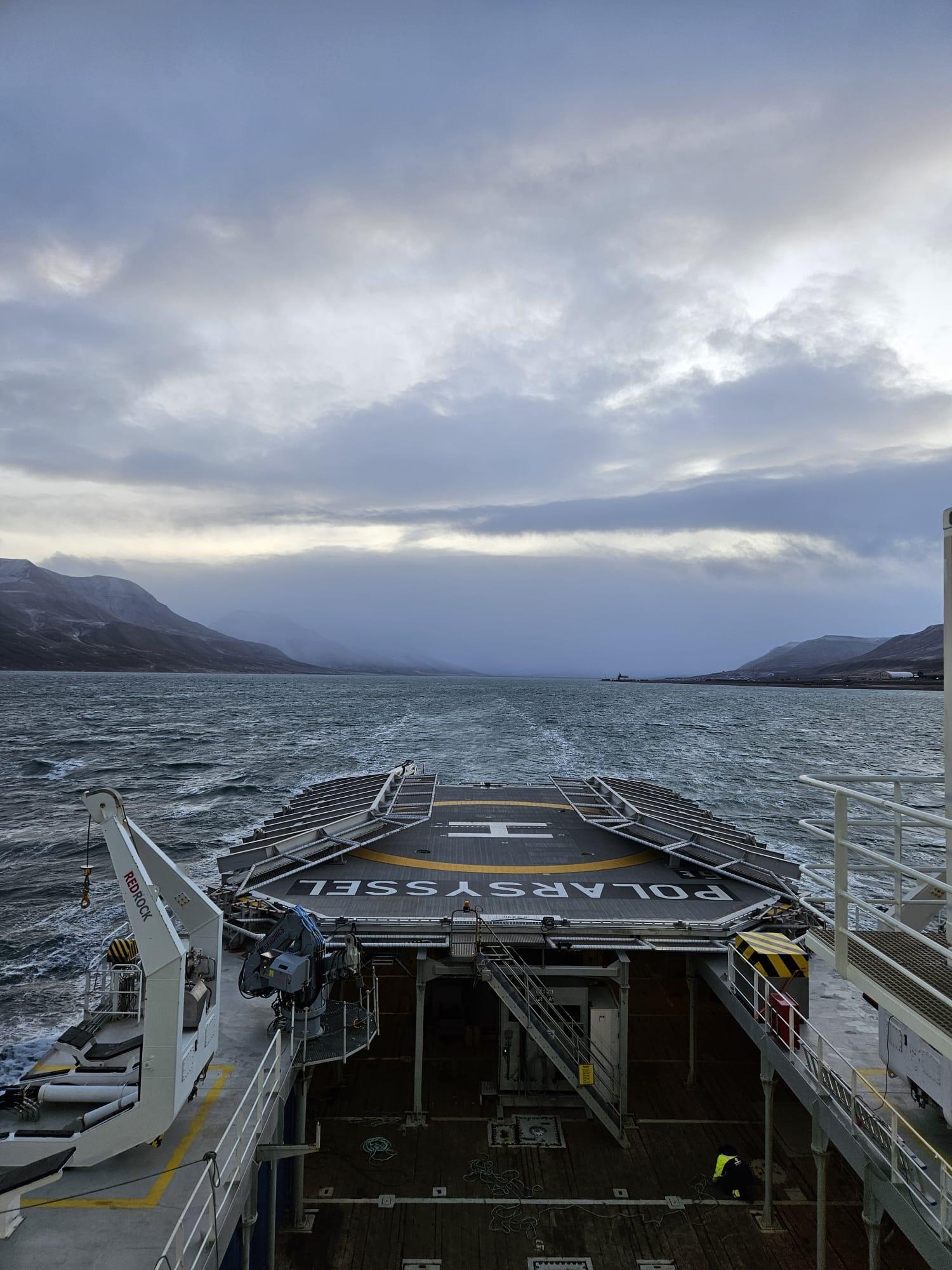
My personal highlight were the weeks focused on land ice and snow. I deepen my understanding of how different glacier properties can be measured using satellites. I also learned for the first time how remote sensing can be applied to study snow, which was completely new to me. The field excursions were also amazing, especially the boat trip to the Borebreen glacier. Seeing such a large glacier calving directly into the sea was an impressive experience. Overall, the combination of theory, data interpretation, and field experiences made the course both educational and inspiring.
Would you recommend the programme to other students?
Yes, I would recommend this course. It is well organized and offers a great balance between theory, practical, and field activities. Although there are not many field days, each one was meaningful and exciting. The project report allows you to explore a topic in depth, which I learned a lot from. Besides the academic part, staying in Svalbard makes it a unique experience. There are many opportunities to explore nature and enjoy the Arctic environment. It was an unforgettable six weeks.
Details
| Regional focus | Arctic |
| Location | Svalbard |
| Funded amount | 1,500 CHF |
| Project dates | 22nd September 2025 – 31st October 2025 |
| Category | Field and Summer Schools |