
Chapter 0: Why a flight computer?
At the daring frontier of science, deep within the Extreme Environments Research Laboratory (a.k.a. EERL), we chase clouds and wrestle with aerosols in the wildest corners of the planet – the polar regions!
Our secret weapon? A helium-filled tethered balloon that gracefully ascends into the sky, gathering data and admiring the view like a very committed tourist. As it rises and dips, it sniffs out secrets from the lower atmosphere and brings them back for analysis. Now, this balloon is not just a scientific instrument – it is a celebrity. In Narsaq, Greenland, the locals affectionately dubbed it the “Sea Eagle”. Meanwhile, in Turtmann, Switzerland, some cheeky soul on social media mistook it for a UFO – perhaps hoping for an alien encounter only to get atmospheric science instead. And in the summer months? People claim it resembles a gigantic floating ice cream. Which, honestly, we take as a compliment. After all, what better way to scoop up data?
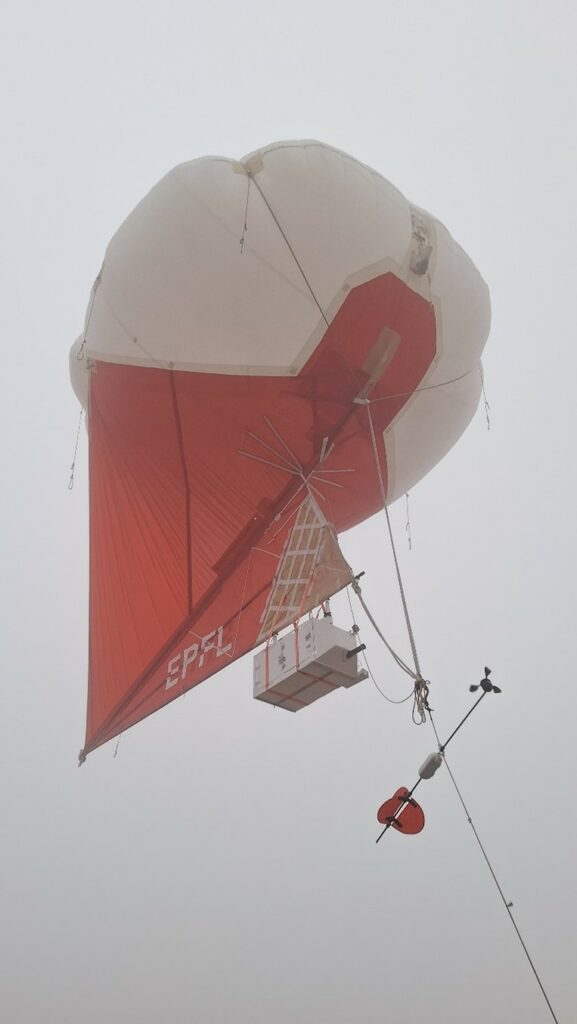
But here’s the twist – while the balloon itself might steal the show with its dramatic skyward voyages and good looks, the real magic happens inside the mysterious white payload box dangling below the keel like a high-tech treasure chest.
This humble-looking box is actually a scientific wonder factory. Tucked inside are instruments that measure everything from how many particles are floating around (particle number concentration!), to how big they are (size distribution!), to how much sunlight they are gobbling up (light absorption!). It also sniffs out trace gases like CO₂, O₃, and CO. But wait, there is more! It also collects airborne particles on special filters, which we later analyse in the lab using either chemical wizardry or very tiny microscopes that make us feel like atmospheric detectives solving nano-sized mysteries.
As if that was not enough, we strap an extra instrument right onto the tether to measure wind speed and direction, pressure, temperature, and humidity. It is like the balloon is doing a full atmospheric health check while floating in style.
Of course, powering all this fancy gear requires an onboard battery, which must be light enough not to turn our noble balloon into a grounded boulder. So, we are very picky when it comes to choosing our instruments and even more strategic when adapting the battery for each flight. It is like packing for a science expedition with strict baggage fees – every gramme counts!
And with this airborne lab juggling all those instruments, we naturally need a brain to coordinate everything and keep the data flowing smoothly. Because up in the skies, even science needs a co-pilot.
Chapter 1: The flight computer materialises
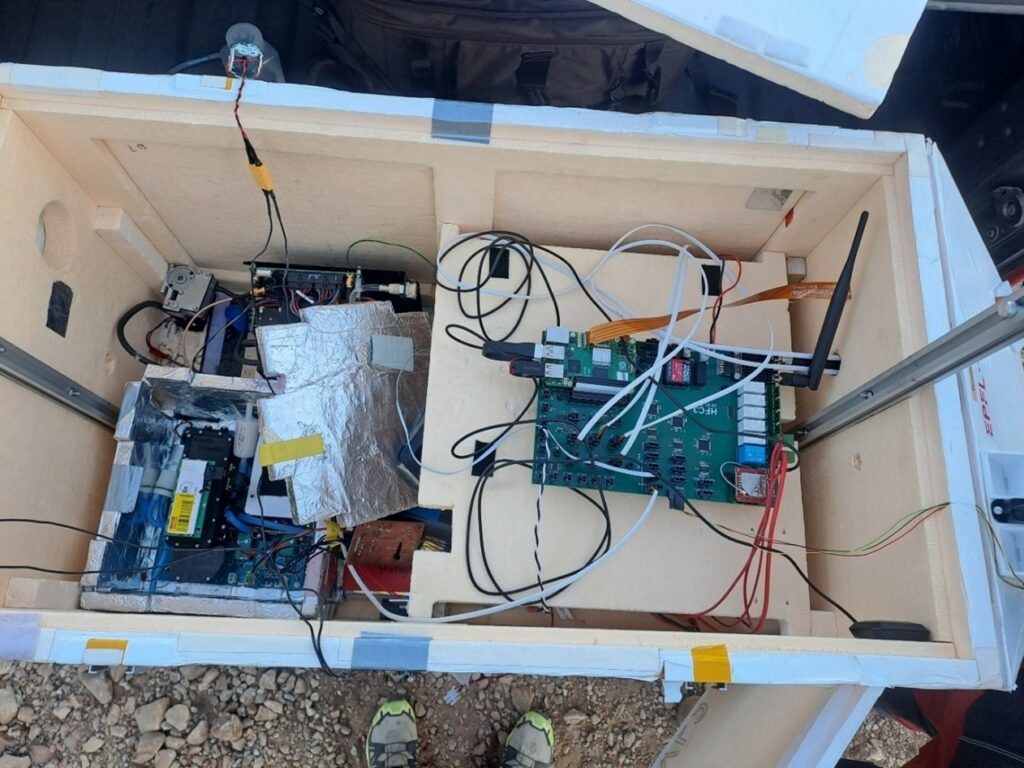
Enter the flight computer – the brain of our balloon, the mission control in the sky, the unsung hero sitting inside that little white box. This technological marvel is the centerpiece of our airborne operation, feeding us live telemetry like a weather-whispering oracle. Thanks to it, we on the ground get real-time updates on what the balloon is seeing, feeling, and thinking (okay, maybe not thinking, but definitely sensing).
Without this clever contraption, we would be flying blind – and not in the cool, “trust-your-instincts” kind of way. We would have no clue whether our precious instruments are still happily humming along or throwing a tantrum mid-air. Now, up until recently, our system was… let’s call it charmingly modest. It was based on a trusty Arduino – a plucky little board that bravely handled the basics. It gave us just enough data to keep the show running, kind of like flying a spaceship with a calculator, duct tape, and a dream.
But science is an adventure, and it was time for an upgrade…
Benefitting from a Technogrant by the Swiss Polar Institute (SPI) led by the University of Applied Sciences and Arts of Western Switzerland (HES-SO Valais), who are experts in designing computers, together we aimed to bring our setup to the next level. We wanted to be able to connect all our different instruments to a central device to have live data stored internally in a single file with a unique time stamp, while some selected data is also sent to the ground. All instruments should also be controllable individually, even in flight. The new flight computer is based on a Raspberry Pi with low energy consumption, it is lightweight but still powerful enough to compile all the data and control all instruments. Charles Praplan (HES-SO) designed the flight computer with all the new components and the electronics for the printed circuit board (PCB). Steve Gallay (HES-SO) rooted the PCB and printed it, then Lionel Favre (EERL) soldered all the electronics on the PCB board. Marc Nicollerat (HES-SO) wrote the software for the Raspberry Pi to automatically detect all the instruments, initialize them, control them, and store the data in a common file. He also programmed the radio module and the ground interface to communicate with the flight computer. Finally, Yolanda Temel and Joanna Alden (EERL) wrote a software to process all the scientific data.
Chapter 2: The beginning is the hardest part
Fast forward to summer 2024 – the sun is shining, birds are singing, and Lionel is about to wrestle with a circuit board. He powers up the system, ready to test each module like a boss… until–plot twist! –none of the RS232 ports are working. After some serious squinting and a facepalm moment, Lionel discovers he did not just make a small mistake: He mixed up the resistance by a factor of 1000. That is not a typo, that is talent. Quick fix, no big deal. But then… what is that smell? Is something burning? Is it the sweet scent of engineering doom? Turns out an analogue converter was left floating, and the component decided to go out in a blaze of glory. One heroic component swap and a tiny life-saving cable later, the board rises again. Several surprise “features” are dealt with (some politely, others with gritted teeth), and finally… the system is ready for its first field campaign.
Chapter 3: The heat in Athens
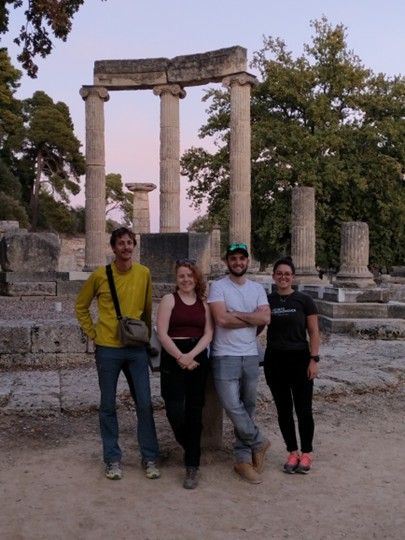
Picture kindly taken by a passer-by
The plane touches down in Athens, and we step out into an oven. 35°C in October? The sun blazes like a Greek god showing off. Our jackets, once wise packing choices, now feel like betrayal. But there is no time to melt – we are on a mission. The quest? Customs clearance for our precious instruments. What should be a simple bureaucratic stop turns into a labyrinth worthy of Minos himself. For two hours, we wander the halls of the airport – back and forth, door to door, office to office – nearly two kilometres of red-tape-induced odyssey. At last, with stamps secured and papers signed, we emerge from the administrative underworld victorious (and slightly sweaty).
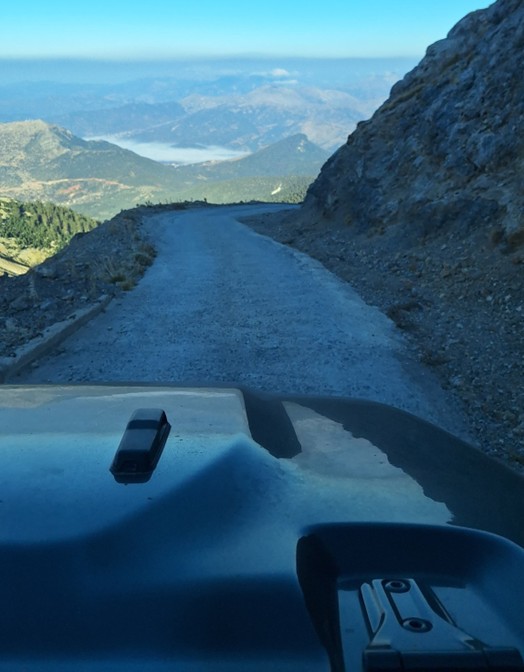
Next challenge: wheels. We had requested a modest pickup truck – something practical for transporting our balloon through windy Greek mountains in case we need to find shelter quickly. What we got instead? A full-sized Jeep Gladiator Premium! At first, we laugh. Then, we hit the mountain roads. The laughter turns into awe. The four-wheel drive growls over rocks, hugs hairpin turns and climbs like the balloon. Turns out, the Gladiator might just be our unsung hero.
Chapter 4: Conquering the Peloponnese
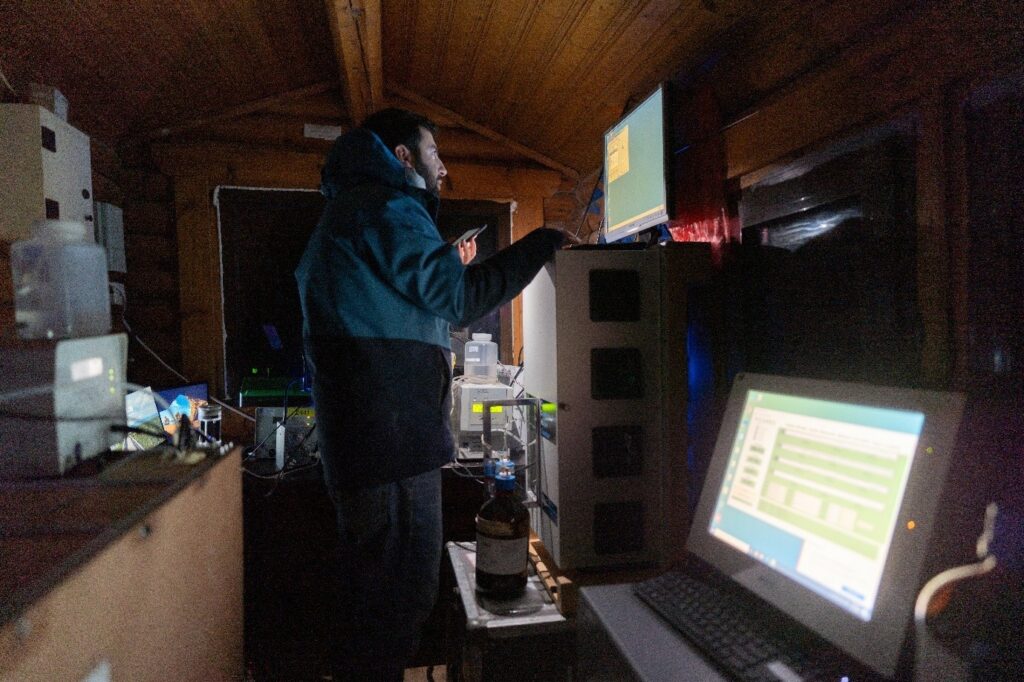
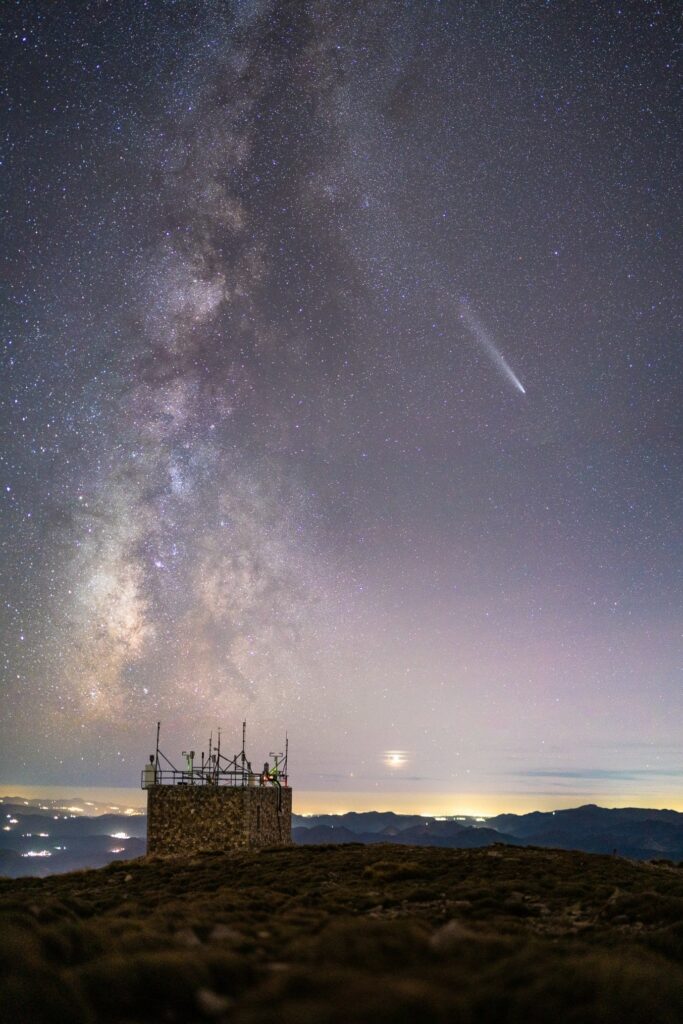
After surviving the Athenian heat and taming the Jeep Gladiator, we set our sights on the rugged wilderness of the Peloponnese. Our destination? The legendary Mt Helmos. Our mission? The CleanCloud Helmos Orographic Site experiment, or CHOPIN for short – because scientists love catchy campaign names. CHOPIN aims to unlock the secrets of alpine atmosphere – a crucial step in understanding the post-fossil fuel world, cloud formation, and the traces left by Saharan dust traveling thousands of kilometers across the Mediterranean. Our concrete job is to launch the tethered balloon into the swirling skies and perform vertical in situ measurements. But we are not alone. A large consortium of European institutes and universities has gathered, wielding an arsenal of remote sensing instruments and nimble UAVs, each playing their part in this scientific saga. Two ground stations stand guard like ancient sentinels: “HAC2”, perched high on the mountain’s summit, braving the thin air and fierce winds; and “Spitaki”, the “little house” nestled by the ski resort, a cosy outpost on the plateau 600 metres below. Together, this network of watchers reads the stories whispered by aerosols and clouds, piecing together the puzzle of nature’s grand design.
Chapter 5: Finding the launch pad
But before our balloon can conquer the skies, we face our first true challenge: finding the perfect spot to launch. In this wild alpine surrounding, the terrain is tricky and the ground is uneven. The mountains themselves conjure fierce turbulence that could send our balloon tumbling downwards. And there is a sneaky enemy lurking nearby – the ski resort’s intricate web of cables and infrastructure. One wrong move and our tether could become a tangled mess, dooming the flight before it even begins. After a strategic alliance with the ski resort manager, we finally discover a hidden gem: a quiet clearing near a humble little hut. It offers shelter for our gear and a perfect launching pad. With the site secured, we roll up our sleeves. It is time to set up our payload, fire up the flight computer, and prepare for lift-off. The mountain is waiting… and so is our balloon.
Chapter 6: Lift-off
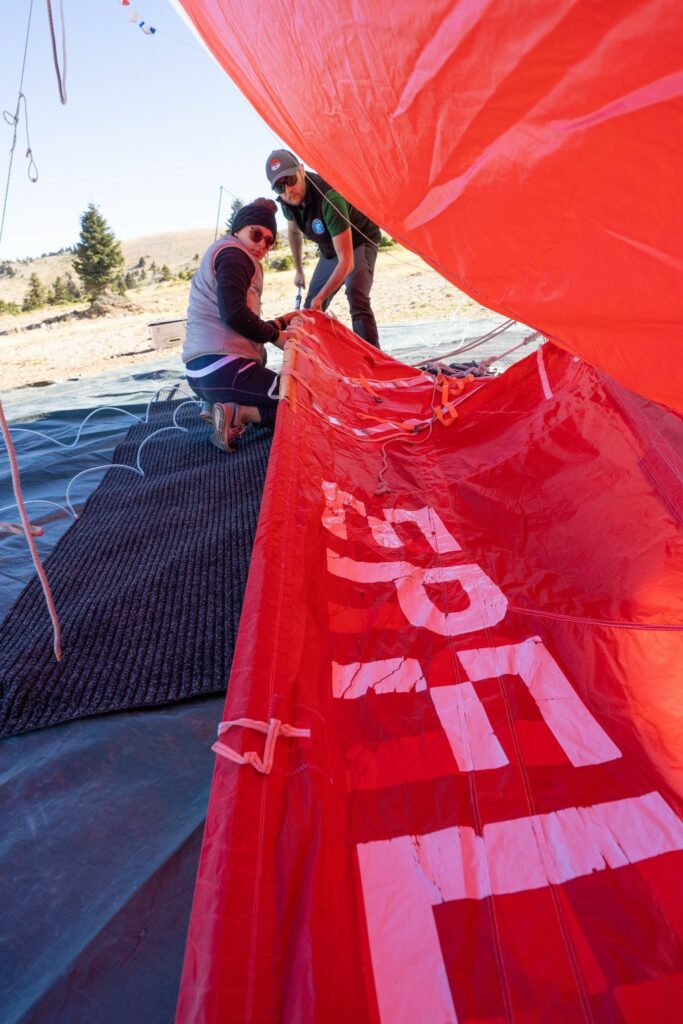
We turn to the next critical phase: payload assembly. At the heart of our airborne explorer lies the flight computer, the master brain that will orchestrate every sensor, every reading, every byte of atmospheric whisper. Like a band of engineers, our team springs into action. Cables crisscross the payload like vines on a Greek temple – only here, each connection holds the key to insight. With so many instruments eager to speak through the same wires, it takes sharp eyes and steady hands to bring order to chaos. Everyone pitches in. This is no place for passive observers:Practice is survival, and the only path to mastering is to practice together.
A quick call to the Greek aviation authorities – theguardians of the national skies – and we have the green light. Lift-off.
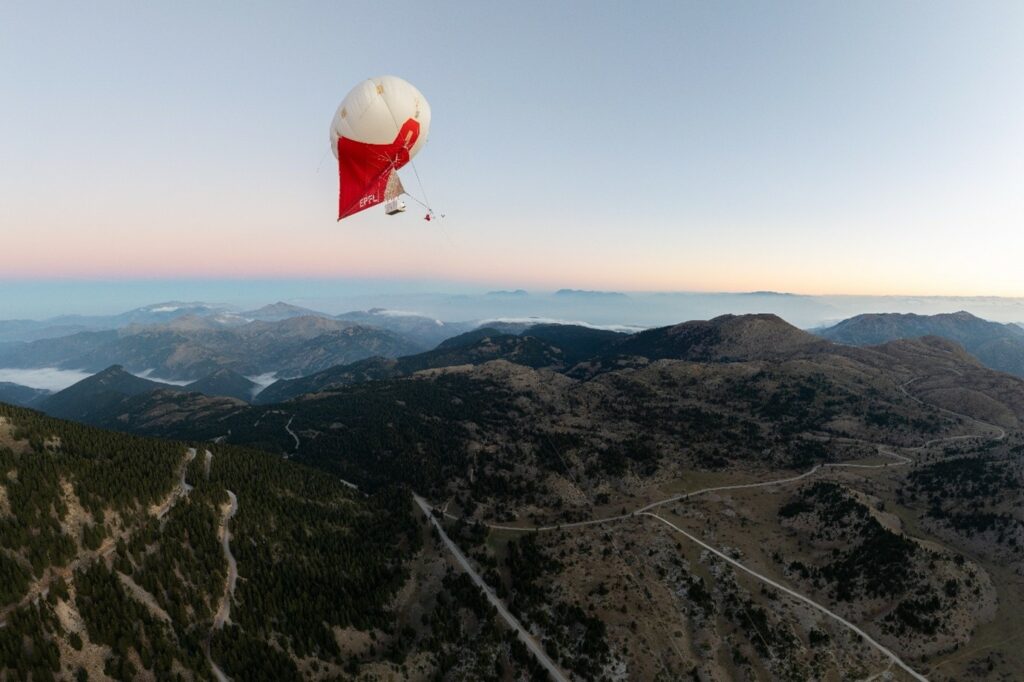
Our creation rises into the heavens, floating gently, elegantly. It is a moment of quiet awe, watching the fruits of the HES-SO / EPFL collaboration ascend for the very first time. But we are quickly reminded: The mountain plays by its own rules. Heat bubbles bounce off the rocks, low-level jets slice through the atmosphere, and the high altitude adds an extra challenge to the balloon’s ascent. Mother Nature is not about to hand over her secrets without a test of will. So, we adapt, like all good outdoor scientists do. Our strategy shifts: We become dawn chasers and dusk riders, launching in the calm serenity of early mornings and twilight evenings, when the sky is gentle and the winds have not yet awakened. At those golden hours, the balloon soars up to 400–500 metres above the surface, sending down treasure troves of vertical profiles – snapshots of the sky’s invisible workings.
Chapter 7: Chasing the clouds
Flight after flight, ascent after ascent, our team becomes a well-oiled machine: undo knots, connect payload, launch, recover, repeat. But this is not just routine; with every launch, we scribble new ideas, bug fixes, and “aha!” moments for Marc, the mastermind behind the flight computer, waiting back home like Q in a Bond movie lab. This trusty little box of circuits and code is more than just a data logger – it is our balloon’s brain. With it, we get live readings from every instrument riding skyward. That real-time feedback? A game changer. It allows us to fine-tune the balloon’s altitude mid-flight and linger in the most fascinating slices of sky – dense particle layers, whisper-thin hazes, and (hopefully soon) the elusive clouds themselves.
As the days go by, our data archive grows, and soon we are looking at some striking vertical profiles: layered aerosols stacked like geological strata, telling tales of long-range dust sweeping in from distant lands, draped atop locally produced particles. It is beautiful, it is textbook-worthy – but it is still not what we came here for: aerosol–cloud interactions.
But here is a cruel twist of fate… it just won’t cloud. Day after day, the sky grins down at us in flawless blue, like it is mocking our entire campaign. Who would have thought we would ever curse perfect weather? With only a few days left, morale starts to dip. We joke about buying a fog machine. We scan the skies like ancient navigators watching for omens. We almost give up. But then – a glimmer of hope. It is 4:30 a.m. The stars are still winking above us as we trudge back to the launch site, eyes bleary but spirits cautiously high. And then we see them: clouds, sliding stealthily over the mountain range like a gray tide. Game on!
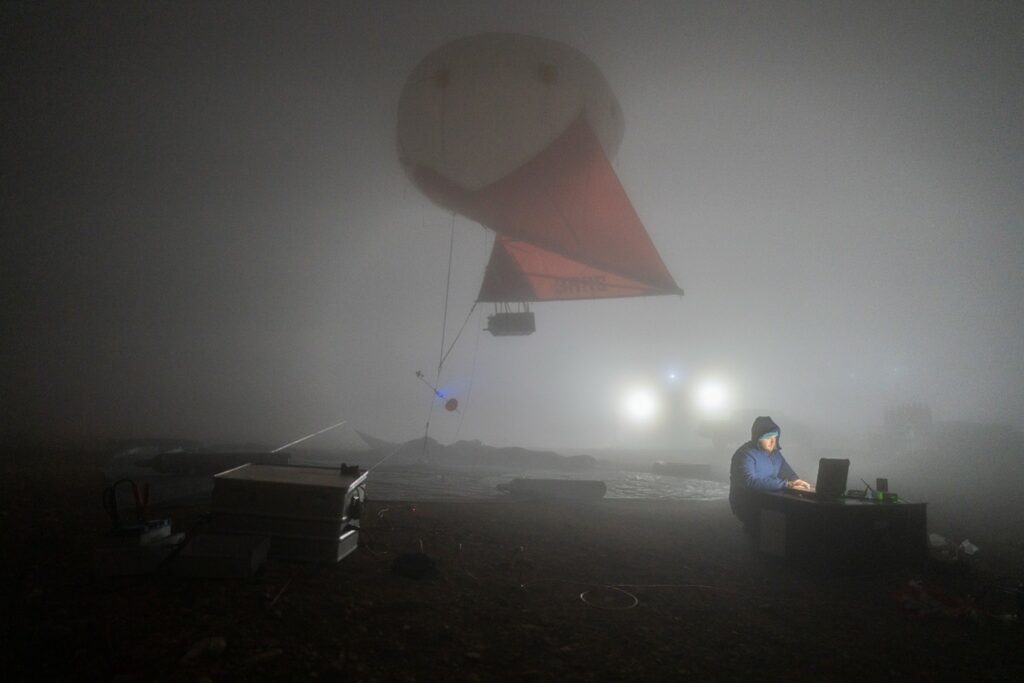
We spring into action, launching flight after flight. With every ascent, the clouds creep closer, thicker, lower. By 4 p.m., the mountain is wrapped in a dense foggy cocoon. Visibility? Maybe ten metres. Mood? Electric!
Twelve hours. Eight balloon flights. A full day enveloped in atmospheric soup. We are damp, tired, cold and still slightly sunburnt – but absolutely euphoric. We had finally caught the clouds.
Final Chapter: From mountaintops to the Frozen Frontier
With our fog-filled finale in the bag and a hard drive full of glorious atmospheric data, we descend the mountain. Our clothes are wet, our boots are muddy, and our faces fog- and wind-kissed – but the mission is complete. The Helikite rests, deflated but victorious, its tether finally still. We retreat to Kalavrita for one last dinner, more laughter than conversation now, and sleep the deep sleep of the thoroughly accomplished. The next morning, it is time to pack up. Cables, crates, payloads, and memories all get sealed away and shipped back north, to Switzerland.
Back home in Sion, Marc welcomes the returning system like a long-lost friend. He dives into the code, squashing bugs, simplifying operations, and turning fieldnotes into functional features. The ground computer is now sleek, user-friendly, and surprisingly polite. But there is a twist in this tale. For the final round of updates, Marc must fly blind: no hardware, no tests, just code and hope.
The reason? The Helikite system has already been shipped off to Antarctica. Yes, really. It is heading straight into the icy heart of the Southern Hemisphere for a two-month deployment during the SNSF Consolidator ORACLES project. There, Michael and Yolanda take the baton, uploading Marc’s final updates in the field and sending the Helikite aloft once again – this time into a world of katabatic winds and ghostly silence. But that is a story for another expedition log…
Fast forward, back in Sion, fuelled with field-tested wisdom, the team gets to work on the next chapter. With real-world experience from both the Greek peaks and Antarctic plains, the flight computer evolves. A final version of the printed circuit board is crafted with precision and care by Charles and Steve at HES-SO – sleeker, tougher, and ready for anything. But we do not stop there. A smaller balloon system awaits: a nimble little craft with razor-thin weight margins. No problem. The flight computer is now miniaturised, in a compact shell and more powerful than ever with new instruments being integrated. The adventure continues.
When your lab is the sky, there is always another layer to explore.
Technician Lionel Favre and Scientist Michael Lonardi are both part of the Extreme Environments Research Laboratory at the EPFL Valais-Wallis in Switzerland. Marc Nicollerat is a Research associate UAS at the HES-SO Valais. Their field trip took place in autumn 2024 in the context of the MAMS project led by Joseph Moerschell (HES-SO Valais Wallis) and Julia Schmale (EPFL-EERL), with financial support from an SPI Technogrant.